2016 was my first full year patch watching Shalford Water Meadows and, whilst it may not have proved to be the undiscovered rarity trove I had hoped for, it still turned up some goodies and surprises. I notched up 106 species in 175 visits, earning me 113 points on Patchwork Challenge. Really not too shabby for an inland site, especially in Surrey, and it just goes to prove that you can find decent birds anywhere if you're prepared to put in the time and effort to look for them.
My girlfriend and I are currently looking to buy a house which may well see us leaving the Surrey Hills area this year, if not the county altogether - possibly hopping across the border into West Sussex. Twelve months' dedicated patch working after a couple of years as a bit of a birding nomad has really reminded me how rewarding the hobby can be and, wherever we may end up in 2017, finding myself a new local patch will be high on my list of priorities!
As a final round-up of my year at Shalford I thought I'd just do a chronological list with a few photos and notes thrown in rather than ramble on for too long. Enjoy reading, and Happy New Year!
3rd January
1. Coal Tit - Reasonably common, thought to have bred.
2. Song Thrush - Reasonably common, thought to have bred.

4. Blue Tit - Very common all year, certainly bred.
5. Nuthatch - Reasonably common in the wooded areas. Thought to have bred.

7. Woodpigeon - Very common all year and certainly bred. The highest count in autumn was 690 south/south-west on 2nd November.
8. Wren - Very common all year, certainly bred.
9. Canada Goose - Common all year but particularly in winter when reasonably large flocks were seen to leave roost in the Broadford area, often in excess of 60-70 although no definitive counts were made.
10. Common Gull - A regular flyover species in winter, sometimes in large numbers (200+ on 20th March), presumably birds going to and from roost at Walton Reservoirs. Some of these are surely the same birds Ed Stubbs sees down at Thorncombe Street, although it's interesting to note that when the gulls are flying north to roost they appear to come from both the south-west and the south-east and merge at the Wey and Arun Junction.
11. Bullfinch - Thankfully still common on the patch, especially along the Railway Line Walk. Recorded on pretty much every visit. Almost certainly bred.

13. Black-headed Gull - A very common flyover species away from the breeding season. The highest count was 1035 south over St Catherine's Hill on 8th November, clearly birds heading out from roost to feed.
14. Dunnock - Very common all year, certainly bred.
15. Goldfinch - Common all year, breeding presumed. Often forming big flocks with Siskin in Alders around St Catherine's Lock in winter.
16. Pied Wagtail - Unsurprisingly the commonest Wagtail species on the patch, presumed to have bred as juveniles were seen in the summer. The highest count was 105 south early on 24th December, these presumably birds coming out of the roost outside Frankie & Benny's in Guildford.
 |
| Pied Wagtail adult and juvenile, Horse Field, June 2016 |
18. Jackdaw - Very common, presumably bred nearby.
19. Blackbird - Common all year, certainly bred.
20. Herring Gull - Common flyover species away from the breeding season although generally not as numerous as Black-headed or Common. The highest count was 190 over St Catherine's Hill on 24th December.
21. Redwing - A common sight and sound around the meadows in winter. The last of the first winter period were heard along the Railway Line Walk on 29th March while the first of the second winter period were 8 over St Catherine's Hill on 5th October. The highest counts were 60 on 8th October and 2nd November.

23. Siskin - Common and numerous in winter, the highest count was 300+ which flew out of roost in Alders near St Catherine's Lock on 31st January.
24. Jay - Common all year, presumably bred locally.
25. Goldcrest - Common all year and probably bred, numbers noticeably supplemented in winter. The highest count was 10 on 1st October.
26. Firecrest - Plenty of records this year of this increasingly common species, mostly along the eastern edge of the patch between Dagley Lane Allotments and Shalford Park. Most records were of single birds but two were present on 3rd January.
27. Treecreeper - Reasonably common all year but never numerous. Probably bred.
 |
| Treecreeper - Richard Waters |
29. Grey Wagtail - Common along the river and on the marshy areas. A pair was thought to have bred under Broadford Bridge. The highest count was 6 on 17th September.
 |
| Grey Wagtail - Richard Waters |
4th January
31. Green Woodpecker - Common all year round, two juveniles were seen on 16th July.
32. Teal - The commonest duck species on the patch in winter, the highest count was at least 30 on 3rd April although always hard to get an accurate count owing to the scattered location and variable water level of the various pools.

 |
| Mandarin Duck - Richard Waters |
35. Snipe - Common in winter, again usually seen or heard flying around at dusk or else flushed from the wetter areas during the day.
36. Egyptian Goose - Regular flyover species, seemingly following the river to and from roost. The highest count was 13 over on 28th January.
 |
| Egyptian Geese |
37. Kestrel - The commonest raptor on the patch, at least one pair bred. A ringed female was observed to catch and eat a Slow-worm by the railway line on 20th September. This bird was ringed as chick by Jeremy Gates in Worplesdon on 30th May 2014.
 |
| Kestrel - Richard Waters |
39. Barn Owl - Seen fairly regularly, particularly in the first winter period, but sporadic records right through the year suggest the species may have bred nearby. All my records were of single birds but lengthsman Rob Craig tells me he's recently seen two hunting together around the St Catherine's Lock area.
40. Moorhen - A common sight on the navigation and the marshy areas of the patch. A pair bred in the large puddle between the Railway Line Walk and Horse Field. A juvenile Moorhen was taken by a Sparrowhawk on 21st July.
41. Grey Heron - A common sight all year round, generally in small numbers. The highest count was 6 on 7th September.

9th January
43. Buzzard - A very commonly seen raptor. One pair bred. The highest counts were 10 on 31st March, 9th April and 12th April.
 |
| Buzzard - Richard Waters |

 |
| Reed Bunting |
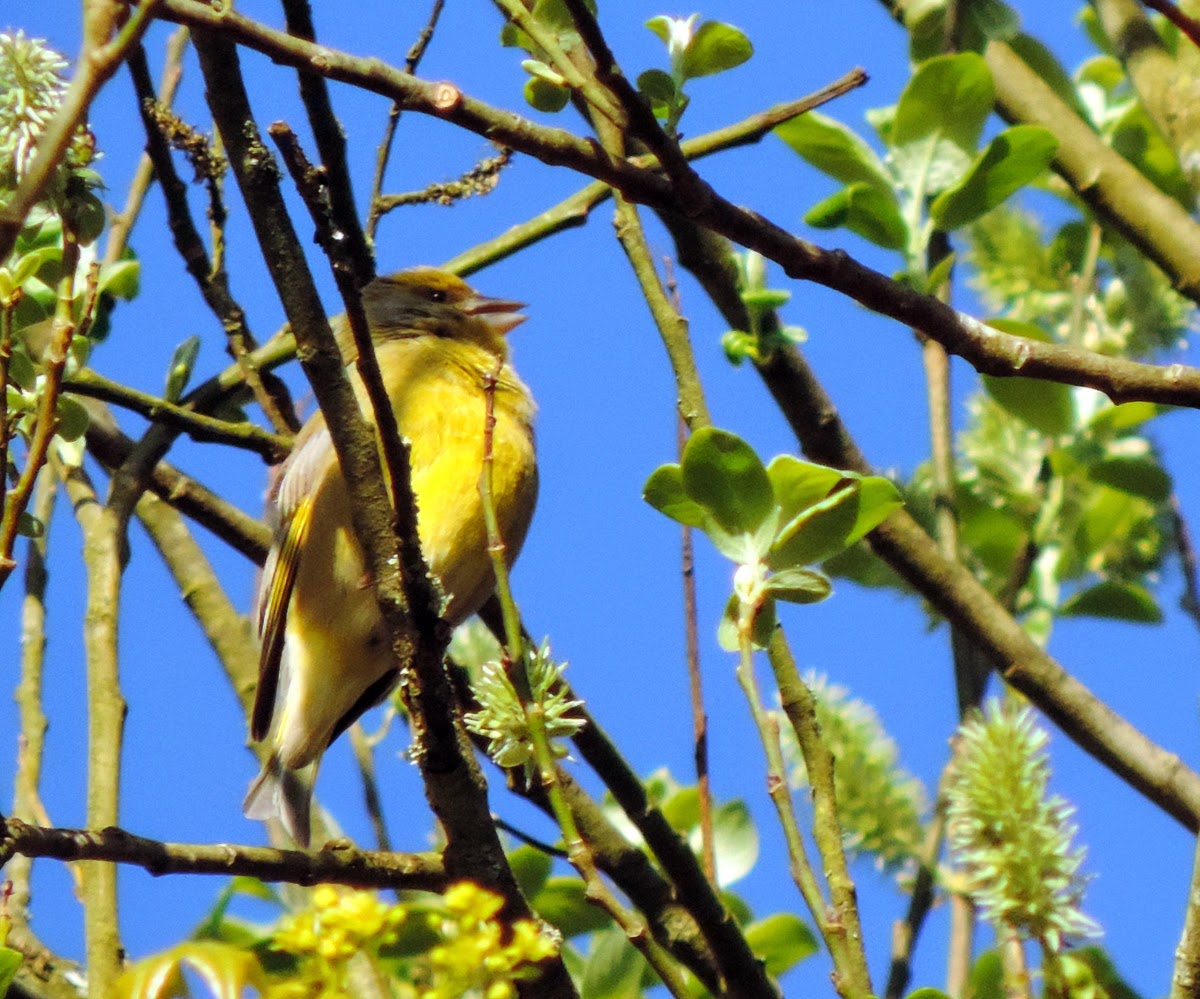
47. Greenfinch - Still fairly common here although only in small numbers, the highest count was 6 on 20th February. A pair may have bred in Broom Meadow.
 |
| Stonechat |
 |
| Cormorants |
51. Lesser Redpoll - Sometimes found the Siskin flocks in winter or recorded as flyovers but generally only as singles or small numbers. The highest count was 12 on 5th February.
52. Feral Rock Dove - Very common in small numbers or as flyovers, bred under the railway bridge across the navigation.
53. Sparrowhawk - Perhaps the third most commonly seen raptor on the patch. Regular sightings in the Broadford Marsh area in the breeding season including adults carrying nesting material and food suggests local breeding.
10th January
54. Green Sandpiper - There were six records of this species on the patch this year, likely involving only four birds; 10th/11th January, 12th July, 6th November, 29th & 31st December
 |
| Green Sandpiper |
11th January
55. Shoveler - A common sight in winter on the more secluded pools on the patch. The highest count was 14 on 14th March.
56. Coot - Not massively common on the patch, only really seen in the spring when the water levels were at their highest.
13th January
57. House Sparrow - Reasonably common all year round but largely confined to the eastern edge of the patch and the gardens in the Dagley Lane area. Presumably breeds in these areas.
58. Mistle Thrush - Reasonably common all year, particularly around Shalford Park. Presumably bred locally. The highest count was 7 over on 24th December.
59. Chaffinch - Common all year, presumably bred locally. The highest counts were 23, mainly flying over, on 29th October and 8th November.
60. Rook - Common flying over or feeding in St Catherine's Meadow. The nearest rookery is probably the one on the edge of Wonersh so it's likely many of the patch records are birds from there.
61. Linnet - Reasonably common although generally only as a flyover away from the breeding season. The species may have bred in Broom Meadow, however, as there was a regular little flock in this area in the spring, peaking at 10 on 7th April.

63. Fieldfare - The last seen in the first winter period were 3 in the 'Horse Field' on 6th April while the first of the second winter period were 2 over on 29th October. The highest count was 45 on 25th November.
64. Blackcap - This was the only winter record, a male in a Holly by Dagley Lane Allotments. Otherwise very common in summer with at least 19 singing males on 1st May and many juveniles seen.
14th January
65. Red Kite - This species was recorded on 19 of my patch visits in 2016, usually in ones or twos but there were 3 over on 31st March while the highest count was 6 on 14th August.

67. Great Black-backed Gull - There were just a few flyover records of this species in 2016, all involving single birds.
68. Chiffchaff - The first of a few winter records of this species. Very common in the breeding season; at least 23 singing males on 12th April and many juveniles seen later in the year. A very grey individual in the Broadford area on 29th December looked very good for a 'tristis' but unfortunately didn't call (not the bird pictured below).

69. Little Owl - Seen regularly at the start of the year in the Oaks across the navigation from the lock keeper's cottage. A pair were observed mating on 1st April and there were then fairly regular sightings until the end of June all involving just one bird, then no further records.

23rd January
70. Collared Dove - Reasonably common although somewhat seasonal, largely confined to the eastern edge of the patch and the gardens in the Dagley Lane area.
24th January
71. Little Egret - A common sight away from the breeding season. Most records were of single birds bird but two were present on 20th February and 24th December.
 |
| Little Egret - Richard Waters |
30th January
72. Greylag Goose - There were occasional flyover records but this was by no means a common species on the patch. The highest count was 18 west on 22nd September.
 |
| Greylag Geese - Richard Waters |
5th February
74. Little Grebe - A reasonably common sight, generally either on the navigation or St Catherine's Pool. A pair bred on St Catherine's Pool where one adult and four juveniles on 11th June represented the highest count of the year.

18th February
75. Water Rail - There were just four records of this species on the patch in 2016, all either seen and/or heard near St Catherine's Lock aside from one alarm calling at Broadford Marsh on 17th December. One gave lovely views as it swam across the navigation at St Catherine's on 29th December.
20th February
76. Peregrine - There were nine records of this increasingly common species on the patch in 2016, all involving single birds, aside from a presumed family group of three over together on 11th July.
 |
| Peregrine |
7th March
77. Mediterranean Gull - A very welcome addition to the patch list, a winter plumage adult of this species flew low over Broadford Marsh on this date before gaining height and flying north-east.
12th March
78. Ring-necked Parakeet - Just four records of this species on the patch this year, perhaps surprisingly given how common it is in some areas of the county. The south-west corner of Surrey though remains largely screech-free for the time being it seems!

20th March
79. Lapwing - Just a handful of flyover records of this species, the highest count being 26 on 8th October.
28th March
80. Swallow - A very common sight over the river and meadows in the summer months. The first one of the year was one on 28th March, while the last were 130+ over St Catherine's Hill on 2nd October. No doubt there were later records but I was away on Shetland from 9th-16th October.
31st March
81. Sand Martin - The first of the year was one north on 31st March and the last was on 26th August. I was pleasantly surprised to see this species present in small numbers on the patch right through the breeding season. The highest count was 13 on 14th July.

83. Tufted Duck - Remarkably scarce on the patch, present only ever in small numbers on some of the more secluded pools. The highest count was 8 on 11th May.
84. Wigeon - Surprisingly the only record of this species at Shalford in 2016 with at least four flighty individuals in the Broadford area on this date.

1st April
85. Gadwall - There were just a handful of records of this species in 2016 but it was a very welcome addition to the year list. A drake was present on St Catherine's Pool for ten days at the start of the month and a pair were then seen flying over St Catherine's Lock on the 29th. On 24th December a drake and two females were with Mallards on the navigation near Ferry Lane.

3rd April
87. Willow Warbler - A singing male near St Catherine's Lock early on this date heralded this species' welcome arrival to the patch in 2016, albeit only as a passage migrant these days. By the 12th there were at least 7 singing males around the meadows, numbers then tailing off until return passage started again on 2nd August. The last one of the year was on 17th September.
88. House Martin - The first one of the year was a single bird which was seen to fly up under the eaves of a house on the corner of Kings Road on the evening of this date. There were at least five active nests on the row of shops and restaurants here in the breeding season. The highest count was 860 over St Catherine's Hill on 24th September and the last of the year were 50+ west on 2nd October, although as with Swallows I suspect I missed some later departures owing to being away on Shetland mid-month.
 |
| House Martin nest above 'The Snooty Fox' |
89. Redstart - The first of two spring records of this species, this one involving a male which dropped down during heavy rain on this date, followed by a female which was on the fence on the west side of the 'Horse Field' early on 28th April. My first ever 'self-found' Redstarts on passage in my patch birding life, always a lovely bird to stumble across.
10th April
90. Whitethroat - After the first record of a single singing male near the railway line on the western side of the patch on this date numbers increased to at least 14 by 23rd April, this representing the highest count of the year. The species certainly bred in Bog Meadow and Broom Meadow with many juveniles and family groups seen. The last record of the year was 6 on 3rd September.

15th April
91. Great Crested Grebe - Just a couple of records of this species on the patch this year. This particular individual was present on one of the pools for a couple of days, while on 9th May two flew over heading south-west.

21st April
92. Swift - Quite an early arrival for this species with one over on this date, followed by larger numbers in early May. The highest count was 80+ on 11th July and the last record of the year was one over Broadford Marsh with hirundines on 31st August.


26th April
94. Common Sandpiper - Just the one record of this species on the patch, with one present on the towpath of the navigation early morning on this date before being flushed by a cyclist.


4th May
96. Garden Warbler - After this first arrival there were 3 singing males present around the meadows for much of May but breeding was not confirmed. A pair were seen together on 25th June while one in Broom Meadow on 3rd July was surprisingly the last one seen on the patch in 2016.
9th May
97. Reed Warbler - A rather late arrival for this species, there then followed one or two singing males present in the Broom Meadow/St Catherine's area on and off through May and June, then nothing until 25th August when I observed a family group together by St Catherine's Pool.
11th May
98. Spotted Flycatcher - There were just two spring records and one autumn record of this increasingly scarce summer visitor at Shalford in 2016, all in the Broadford Marsh area.

14th May
99. Kingfisher - A surprisingly tricky species to find at Shalford, it took 19 weeks to add it to the patch list (Although Richard Waters had one at the end of February when he took the excellent photo below). The species was then recorded again fairly regularly through until September, suggesting local breeding, although all records were of single birds only.
 |
| Kingfisher - Richard Waters |
18th May
100. Common Tern - Surprisingly the first of only two records of this species on the patch this year, this one involving two birds flying south early morning, and the other record being a single bird on 11th June. This was a big surprise as with birds breeding at other sites along the Wey I really expected to see more of this species as they commuted to and from their feeding sites.
29th May
101. Brent Goose - Certainly the biggest patch surprise of the year for me, finding this bird asleep on Broadford Marsh before it flew off south.
 |
| Brent Goose |
17th June
102. Cuckoo - The only record of this species on the patch this year. A singing male which was heard first near the railway bridge towards Broadford Marsh and then again a little later on further north towards Shalford Park.
18th June
103. Curlew - There were two flyover records of this species on patch this year, not one I particularly expected so a nice addition to the list. One flew north on this date followed by one south-west on the morning of 21st August.
3rd July
104. Hobby - Remarkably few records of my favourite raptor, especially given the amount of feeding opportunities over the marshy parts of the patch. One north-west on 12th September was the last record of the year.
7th July
105. Grasshopper Warbler - One I missed unfortunately but a great patch record, heard by lengthsman Rob Craig reeling in Bog Meadow.
22nd August
106. Lesser Whitethroat - It took until autumn to add this elusive warbler to the patch list, with two records at the end of August involving three birds.
29th October
107. Crossbill - The first of two records of this species on the patch in 2016, both being flyovers. The bird(s) on 29th were heard only from Shalford Park while three flew west over St Catherine's Hill on 10th November.
 |
| A view south along the navigation at Broadford, early morning in April |


